
Clearing Debris After Severe Weather
Storm Clean-up in Saluda for downed trees, blocked driveways, and wind-damaged property access
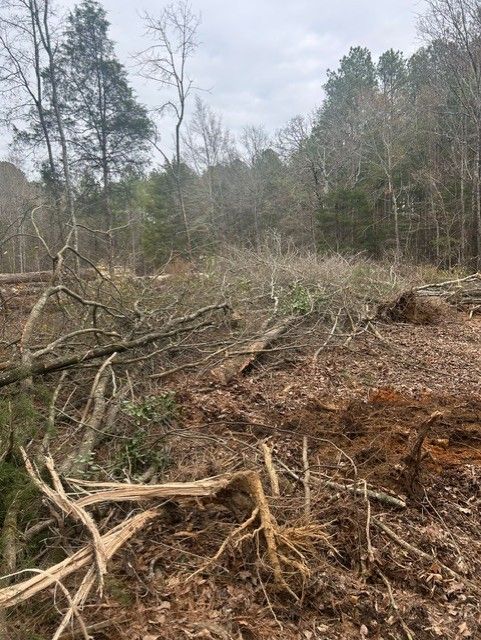
Heavy rain, high winds, and falling trees leave properties blocked and vulnerable to further damage. Halls Precision Earthworks removes storm debris, clears access routes, and restores usable space after severe weather events across Saluda. South Carolina storms frequently bring down hardwoods, wash out low-lying driveways, and scatter limbs across homesites and farm roads, making fast cleanup essential to prevent additional problems.
Storm cleanup focuses on removing fallen trees, cutting and stacking limbs, clearing blocked driveways, and hauling debris that obstructs property use. Equipment selection depends on tree size, root system exposure, and ground conditions left by heavy rain. Properties with multiple downed trees or eroded access areas require coordinated removal to avoid further soil disturbance or damage to remaining vegetation.
Call after a storm to schedule cleanup and property recovery support.
What Changes After Debris Is Removed
Cleanup work begins with assessing tree stability, identifying hazards, and planning removal sequences that keep operators and surrounding structures safe. Trees are sectioned and moved off driveways, yards, and access paths, with stumps and root balls addressed based on whether they interfere with immediate property use. Debris is hauled or stacked depending on volume and client preference, and washed-out areas are stabilized to prevent further erosion.
After cleanup, driveways reopen, sightlines clear, and blocked areas become accessible again. Property owners notice that water flow returns to normal patterns, fire hazards from piled limbs disappear, and the risk of additional tree falls is reduced by removing damaged or leaning trunks.
Storm cleanup addresses immediate debris and access restoration but does not include full grading, drainage repair, or long-term erosion control. Those steps are planned separately once the site is cleared and stabilized enough for detailed assessment.
Common Questions About Storm Recovery
Homeowners and landowners dealing with storm aftermath typically ask about response timing, debris handling, and what gets addressed during initial cleanup.
What gets removed during storm cleanup?
Fallen trees, broken limbs, scattered debris, and materials blocking driveways or structures are cleared to restore access and reduce further damage risk.
How quickly can cleanup begin after a storm?
Response timing depends on weather conditions, site accessibility, and crew availability, but priority is given to properties with blocked access or safety hazards.
Why do South Carolina storms cause so much tree damage?
High winds, saturated soil, and shallow root systems common to hardwoods in the Midlands make trees more likely to uproot or snap during storms with heavy rain and sustained wind.
What happens if erosion washed out part of the driveway?
Washed-out areas are stabilized with fill material and grading to restore access, with long-term drainage solutions planned after the immediate cleanup is complete.
How is debris disposed of after removal?
Debris is hauled to approved disposal sites or left stacked on-site if the property owner plans to use it for firewood or mulch.
Halls Precision Earthworks provides fast storm cleanup for residential, farm, and commercial properties throughout the Saluda area. Contact the team to assess damage and begin debris removal as soon as conditions allow safe access.